The Sante' Mawio'mi (the Grand Council of the Mi'kmaw Nation) and the Government of Canada commemorate the 300th anniversary of the signing of the Peace and Friendship Treaty of 1726
Canada NewsWire
ANNAPOLIS ROYAL, NS, June 4, 2026
The Peace and Friendship Treaty of 1726 has been designated as an event of national historic significance.
ANNAPOLIS ROYAL, NS, June 4, 2026 /CNW/ - Today, the Sante' Mawio'mi and the Government of Canada commemorated the 300th anniversary of the signing of the Peace and Friendship Treaty of 1726 with a day of cultural programming and a special plaque unveiling ceremony at Fort Anne National Historic Site in Annapolis Royal, Nova Scotia.
The announcement of the national historic designation and unveiling of the commemorative plaque were made by the Honourable Rebecca Alty, Minister of Crown-Indigenous Relations on behalf of the Honourable Julie Dabrusin, Minister of Environment, Climate Change, and Nature through Parks Canada's National Program of Historical Commemoration.
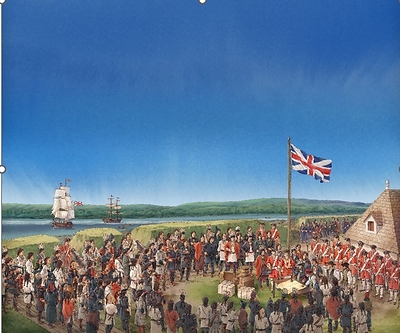
On 4 June 1726, Mi'kmaw, Wəlastəkokewiyik, and Peskətəmohkatewey leaders gathered at Annapolis Royal to ratify a treaty that the nations of the Wabanaki Confederacy had negotiated with representatives of King George I in Boston the previous December. This treaty expressed the unified political will and cooperation of the Wabanaki allies to establish a peace throughout this region.
Leading up to these events, hostilities had been increasing between Wabanaki Nations and the British in Northeast North America as a result of the Treaty of Utrecht of 1713, in which France ceded its territorial claims in the region to Britain without consultation with or recognition of the Indigenous Peoples whose lands were the subject of the treaty. In December 1725, Governor William Dummer of Massachusetts convened peace negotiations in Boston, and agreement was reached with the nations of the Wabanaki Confederacy on a treaty that outlined how the British and Indigenous Peoples could co-exist in these territories in the future.
The Peace and Friendship Treaty of 1726 was the first treaty between Indigenous Peoples and any European state in the region that would become the Canadian Maritimes. It served as the basis for future negotiations and Peace and Friendship Treaties. These treaties are the foundation for Crown-Indigenous relations in what is Eastern Canada today.
The Government of Canada, through the recommendations of the Historic Sites and Monuments Board of Canada, recognizes significant persons, places, and events that have helped shape our country as one way of helping Canadians and youth connect with their past. National historic designations illustrate the defining moments in the story of Canada. Together, they tell the stories of who we are and connect us to our past, enriching our understanding of ourselves, each other, and our country.
Today's event was a collaboration between the Mi'kmaq Grand Council and First Nations of the Mi'kmaw Nation, Mi'kmaw Kina'matnewey, and the Government of Canada. Support was provided by St. Barbara Gold, Freeman Lumber, the Confederacy of Mainland Mi'kmaq, the Union of Nova Scotia Mi'kmaq, Kwilmu'kw Maw-klusuaqn, the Nova Scotia Women's History Society, Canadian Heritage, Parks Canada, Indigenous Services Canada, and the Canadian Coast Guard.
Quotes
"The Treaties of 1725 and 1726 shaped the future of the Mi'kmaw Nation's alliance with the United Kingdom; now is the time to shape our future in the coming generations as a respected nation."
Kji-Keptin Antle Denny
Sante' Mawio'mi (Grand Council of the Mi'kmaw Nation)
"Today is a time to come together in reflection, respect, and shared learning as we honour the enduring relationship affirmed through treaty and the strength, resilience, and continued leadership of the Mi'kmaq people. We are grateful to all those who have joined us to recognize this important moment in our collective history. Mi'kmaw Kina'matnewey is honoured to help host this commemoration. May this celebration deepen understanding of the treaties as living agreements, affirm the vital role of education in carrying forward their truths and responsibilities, and strengthen relationships among all peoples who share this land through continued commitment to reconciliation, respect, and shared learning."
Blaire Gould
Executive Director, Mi'kmaw Kina'matnewey
"On behalf of the Government of Canada, I am honoured to designate the national historic significance of the Peace and Friendship Treaty of 1726, the first agreement of its kind and a cornerstone in the evolution of Crown-Indigenous relations in Eastern Canada. Historic designations recognize the people, places, and events that have shaped our country. Treaties are living documents, and I encourage everyone to learn more about the Peace and Friendship Treaty of 1726 and its enduring place in Canada's past, present, and future."
The Honourable Julie Dabrusin
Minister of the Environment, Climate Change and Nature
"The Peace and Friendship Treaty is one of the foundational agreements in the history of Crown-Indigenous Relations in this country. Three hundred years later to the day, and on the site of its signing, we honour the leaders of the Wabanaki Confederacy who negotiated this Treaty and reaffirm our commitment to the relationship it represents. Designating this Treaty as an event of national historic significance is a recognition of its enduring importance to the Mi'kmaw Nation and to all Canadians."
The Honourable Rebecca Alty
Minister of Crown-Indigenous Relations
"As we mark the 300th anniversary of the Peace and Friendship Treaty of 1726, we honour a relationship that continues to shape our shared future. This Treaty stands as an enduring commitment to respect, dialogue, and cooperation between the Mi'kmaq and the Crown. May this anniversary inspire all Nova Scotians to deepen their understanding of the Treaties and the spirit of Peace and Friendship that continues to guide us today."
His Honour, The Honourable Mike Savage, ONS
Lieutenant Governor of Nova Scotia
"The 300th anniversary of the Treaties of Peace and Friendship reminds us the importance of continuing to build relationships based on respect, understanding, and reconciliation. These celebrations offer communities the opportunity to honour the history, cultures, languages, and living traditions of the Mi'kmaq peoples, and to recognize the enduring legacy of these treaties that continue to unite us today."
The Honourable Marc Miller
Minister of Canadian Identity and Culture and Minister responsible for Official Languages
Quick Facts
Peace and Friendship Treaties
- Between 1725 and 1779, Northeast North American Indigenous Peoples and the British Crown established a series of interconnected agreements known as the Peace and Friendship Treaties.
- Differing European and Indigenous translations and understandings led to disagreements about the meaning of certain treaty terms, resulting in ongoing tensions and the need for subsequent treaties.
- The Peace and Friendship Treaties connect the past and the present and have implications for all Canadians. The 1761 Peace and Friendship Treaty was the reference for the 1999 Marshall decisions, in which the Supreme Court of Canada affirmed Indigenous treaty rights.
Historic Sites and Monuments Board of Canada
- Established in 1919, the Historic Sites and Monuments Board of Canada advises the Minister of the Environment, Climate Change, and Nature regarding the national historic significance of persons, places, and events that have marked history in Canada. Together with Parks Canada, the Board ensures that subjects of national historic significance are recognized and these important stories are shared with Canadians.
- The vast majority of nominations brought forward for the consideration of the Historic Sites and Monuments Board of Canada originate from members of the public. To nominate a person, place or historical event in your community, please visit the Parks Canada website for more information: https://parks.canada.ca/culture/designation/proposer-nominate
Related Documents
The Peace and Friendship Treaty of 1726 (national historic site designation)
Peace and Friendship Treaties
Fact sheet on Peace and Friendship Treaties in the Maritimes and Gaspé
Treaty Education Nova Scotia - Treaty Education Brochure
Related Links
The Peace and Friendship Treaty of 1726 – Fort Anne National Historic Site
The Government of Canada provides financial support to commemorate the 300th anniversary of the 1726 Treaty of Peace and Friendship
Parks Canada
Historic Sites and Monuments Board of Canada
Framework for History and Commemoration
SOURCE Parks Canada (HQ)

